
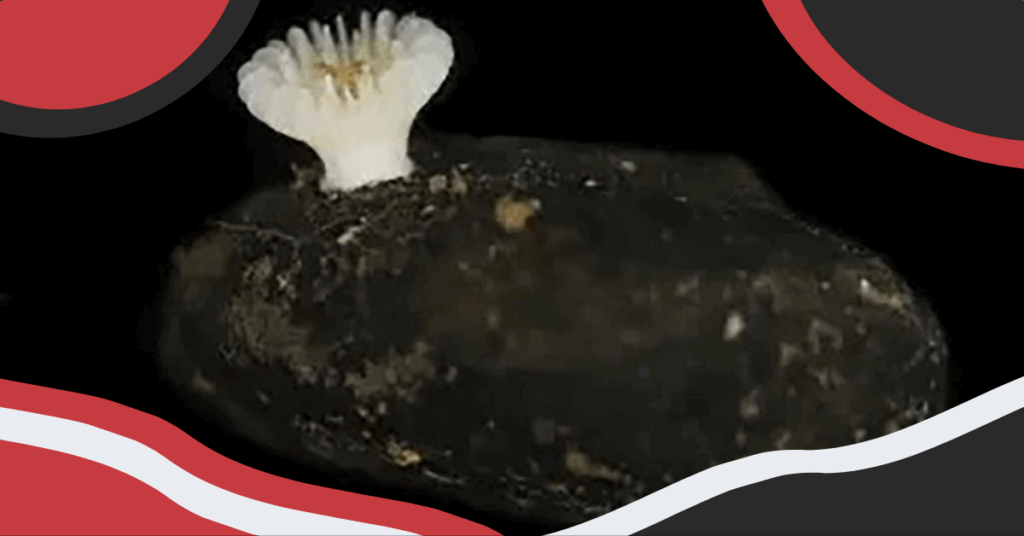
In a significant advance for marine microbiology and the ecology of abyssal environments, an international team of researchers has described a new species of stony coral inhabiting deep-ocean mountain chains. The species, named Deltocyathus zoemetallicus, represents one of the first pieces of evidence of hard corals living directly attached to metallic structures in extremely remote and hard-to-access regions.
Location and Habitat of the New Species
The discovery took place in the Clarion–Clipperton Zone (CCZ), a vast area of the Pacific basin known for its abundance of polymetallic nodules rich in metals. These nodules, which can reach considerable sizes, are found at depths ranging between 4,150 and 4,250 meters (approximately 13,615 to 13,943 feet), under conditions of total darkness and temperatures close to 0°C.
What makes this species remarkable is that it was found attached directly to the nodules, a habitat traditionally considered inhospitable for most forms of life. The presence of Deltocyathus zoemetallicus in this location challenges previous notions about the distribution of corals in the deep sea and provides valuable insight into biodiversity in these extreme ecosystems.
Biological Characteristics and Adaptations
Deltocyathus zoemetallicus has been identified as belonging to the group of azooxanthellate scleractinians, which do not rely on symbiotic zooxanthellae algae for survival, unlike many reef-building corals. Instead of obtaining energy through symbiosis, these corals capture suspended particles in the water using filamentous structures and tentacles, adapting to an environment of complete darkness.
Researchers employed advanced techniques such as micro-computed tomography (micro-CT) and high-resolution imaging to examine the specimens in detail and confirm their taxonomic novelty. The species’ morphology exhibits unique characteristics, including a distinctive calcareous structure and specific growth patterns that differentiate it from other known deep-sea species.
Implications and Conservation
This discovery has profound implications for understanding biodiversity on the seafloor and for the conservation of these vulnerable ecosystems. The presence of corals in habitats targeted for human activities, such as polymetallic nodule mining, raises concerns about the potential loss of species that are still unknown.
Marine invertebrate expert Dr. Nadia Santodomingo emphasized the importance of protecting these habitats in the face of deep-sea mining threats:
“If we remove these nodules, we not only lose valuable minerals, but we also risk the extinction of species we are only beginning to understand, which play a fundamental role in the dynamics of these ecosystems.”
Meanwhile, marine science specialist Dr. Guadalupe Bribiesca-Contreras highlighted how each new finding reinforces how much remains to be discovered about life in the deep ocean:
“This discovery reaffirms that the ocean floor remains a largely unexplored frontier and underscores the need for continued research and conservation to protect these unique ecosystems.”
Frequently Asked Questions
Why are corals important in the deep ocean?
Although they do not form reef structures in deep-sea environments, these corals contribute to biodiversity and the creation of microhabitats in extreme conditions.
What is the impact of polymetallic nodule mining?
The extraction of these nodules can destroy essential habitats for many unknown species and disrupt the stability of deep-sea ecosystems.
Can these species be effectively protected?
Protection requires international conservation efforts and regulatory frameworks to prevent uncontrolled exploitation of sensitive areas.
The discovery of Deltocyathus zoemetallicus expands our knowledge of the hidden biodiversity in the most remote regions of the planet. The interaction between science and environmental protection will be essential to ensure the survival of these species and the preservation of deep-sea ecosystems in the future.